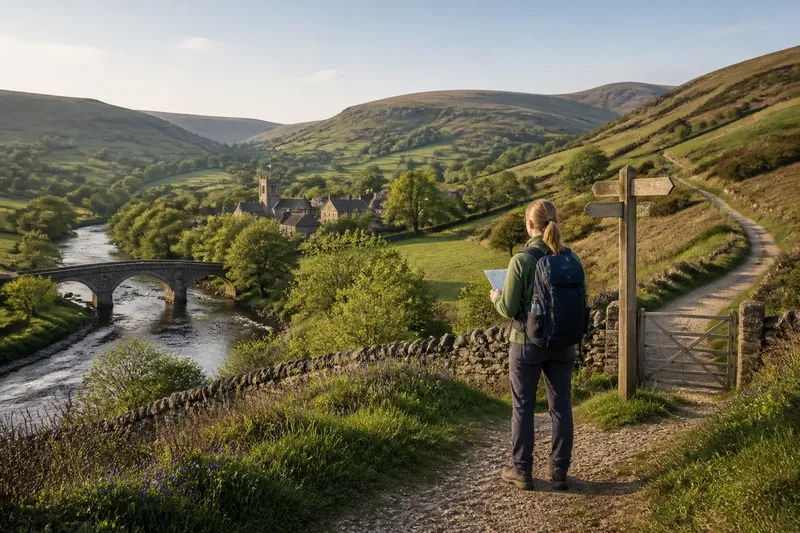
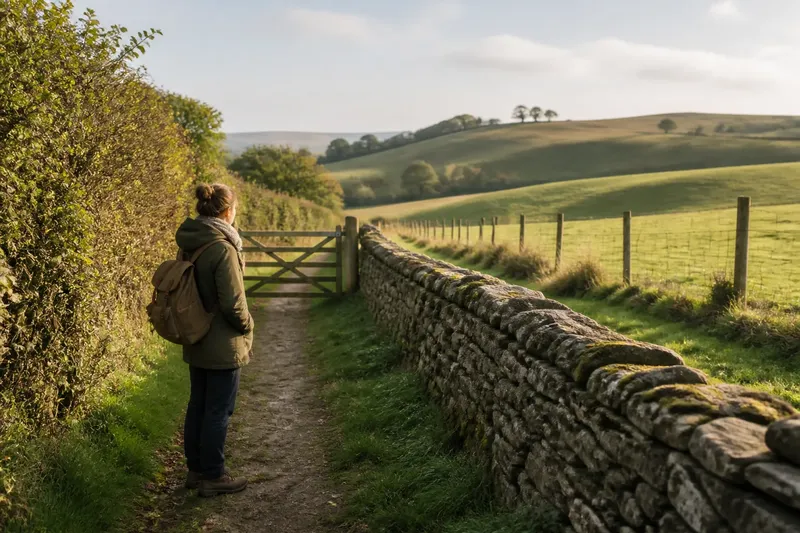
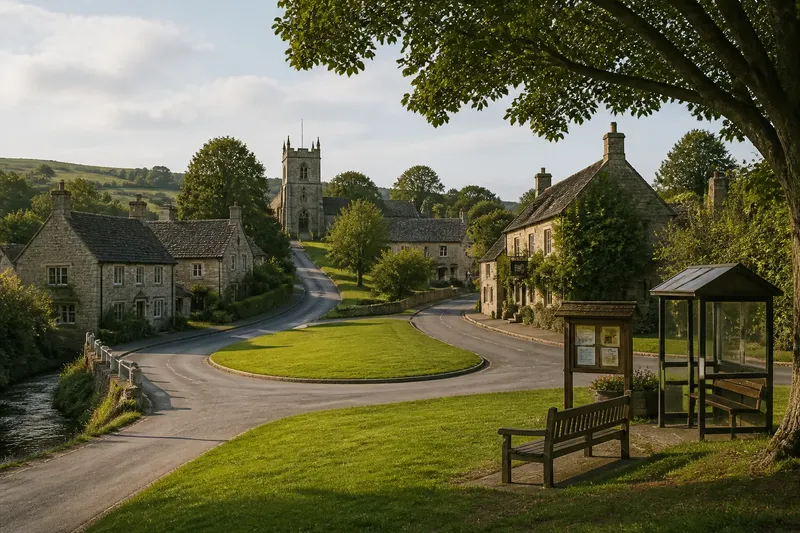
A Late-Autumn Country Day, Planned Around Short Light
Plan a late-autumn country day around short daylight, muddy paths, and changing weather, with a clear turn-back point and a practical route home.
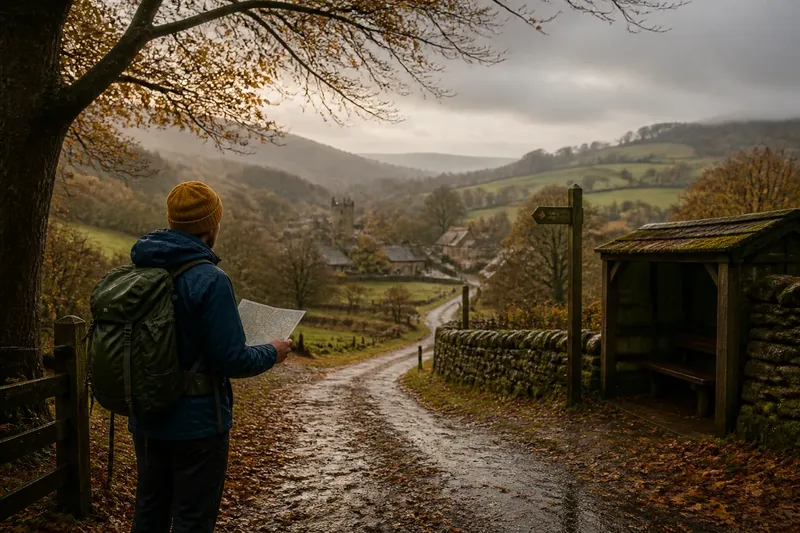
A late-autumn country day needs a route that still makes sense when leaves hide the path and low cloud dims the afternoon. For a late-autumn country day, check the forecast and daylight first, then choose a walk whose ground, shelter, and return options suit those conditions.
Short light changes the details that matter: a familiar field edge may disappear beneath leaves, a grassy slope may turn slick, and a bus stop can feel a long way from shelter when rain starts. Plan for those constraints rather than trying to recreate a longer summer outing.
Read the forecast for the ground, not just the sky
Look beyond the general weather icon. Check for rain, wind, low cloud, and any local warnings, then consider how those conditions affect the actual route: exposed ridges can be unpleasant in strong wind, while wooded paths may become slippery under wet leaves.
Use a current Ordnance Survey map or another reliable mapping source to identify the route surface, steep sections, streams, and places where you can leave the path safely. Check local notices for closures, flood conditions, or access restrictions; a map does not confirm that a path is passable today.
Say you have a forecast for showers and gusty wind, and your chosen route crosses an open ridge before reaching a village. You could switch to a lower public path beside the same village and mark the ridge junction as the decision point; the result is a route that avoids the exposed section while preserving a straightforward way back.
Choose surfaces and shelter that suit late autumn
Compare the route’s surfaces before setting out. A firm track or paved village lane is usually easier to manage in wet conditions than a steep stretch of clay or a narrow path through leaf-covered woodland, though local conditions can still vary.
Identify shelter you can actually use: a public building during its confirmed opening hours, a covered bus shelter, or a permitted stopping place near the route. Do not assume that a church, farm outbuilding, or privately owned shelter is open to visitors.
Wear waterproof outerwear, a warm layer, and footwear with a tread suited to muddy paths. Carry food, water, a charged phone, and a small light for an unexpected delay; the light is a contingency, not a reason to plan to finish in darkness.
Set a clear turn-back point before leaving
Choose a recognizable place where you will reassess: a signed junction, a bridge, or the point where a track leaves a sheltered lane. Decide what would prompt you to turn back, such as worsening rain, a blocked path, or slower progress than expected.
Mark both the planned route and a simpler return on an offline map or paper map. Check the current bus or train timetable if public transport is part of the plan, and identify what you will do if a connection is missed; do not rely on an unverified service or an informal shortcut across private land.
If walking alone or somewhere with limited phone signal, tell someone your broad route and expected return. Adjust the plan to your experience, mobility, and the conditions you find on the ground.
What should you check before a short-light walk?
What footwear works for muddy country paths?
Choose footwear with a secure fit and tread suitable for wet, uneven ground, and check that it is comfortable for the route you have planned. If a path is steep, slick, or beyond your confidence, choose a firmer and more sheltered alternative.
How do I know if a country path is open?
Check current notices from the relevant local authority or land manager, and look for signs at the route entrance. If the path is closed, flooded, or unclear on arrival, do not cross barriers or improvise across private land; use a confirmed public alternative or turn back.
What should I do if low cloud or rain arrives?
Use your preselected turn-back point or shorter route and head toward the known return point. If conditions make continuing unsafe, seek appropriate shelter and arrange suitable transport or assistance.
Can a village café be the main stop?
Yes, if you check its current opening details and the walk still works without it. If it is closed or the weather makes a stop impractical, use food and a warm drink you brought, or head back by the planned route.
Use a simple check to make the route decision
Before leaving, compare the conditions with the route and choose an action for each likely problem. This keeps a change in weather from becoming a rushed navigation decision.
- Check the forecast for heavy rain; if rain is expected on an exposed route, choose a sheltered public path instead, or postpone the walk if no suitable alternative fits.
- Check for wind on open ground; if gusts make the route uncomfortable or unsafe, avoid the ridge and use a lower route, or return to shelter.
- Check whether the path crosses a stream or low ground; if flooding is reported or water blocks the crossing, do not attempt it and take a confirmed public alternative, or turn back.
- Check the ground for steep, leaf-covered sections; if it looks slick or feels unstable, avoid that section and use a firmer path, or shorten the outing.
- Check the latest access notices; if a closure or restriction applies, follow it and choose another permitted route, or cancel that part of the walk.
- Check the return transport timetable; if the last suitable service does not leave enough margin, choose an earlier return or a route ending at a different confirmed connection.
Imagine your starting details are a village bus stop, a planned walk over a wooded rise, a café that may be open, and an afternoon forecast for steady rain; these are invented planning inputs, not a report of real conditions. First, you check the forecast and decide the rise is a poor choice in persistent rain. Next, you look at the map and identify a shorter public lane to the village green, then check that the bus service you need is running at a suitable time. You make the green the destination and keep the café optional; the resulting tradeoff is a less ambitious walk in exchange for firmer ground and a simpler return.
Pack for wet pauses and changing conditions
Keep an extra warm layer and a snack where you can reach them without unpacking everything. A flask can make a brief pause more comfortable, but do not depend on a long outdoor stop if rain, wind, or cold makes it unpleasant.
Protect your map and phone from moisture, and keep a small light accessible in case an unexpected delay pushes the walk later than planned. Follow waymarks and signs, leave gates as you find them, and stay on public rights of way.
For a late-autumn country day, choose the route whose surface, shelter, and return remain workable in the weather you are likely to meet. Recheck the forecast before setting out, and let that decision—not a planned viewpoint or café visit—determine whether to go, shorten the walk, or choose a different path.